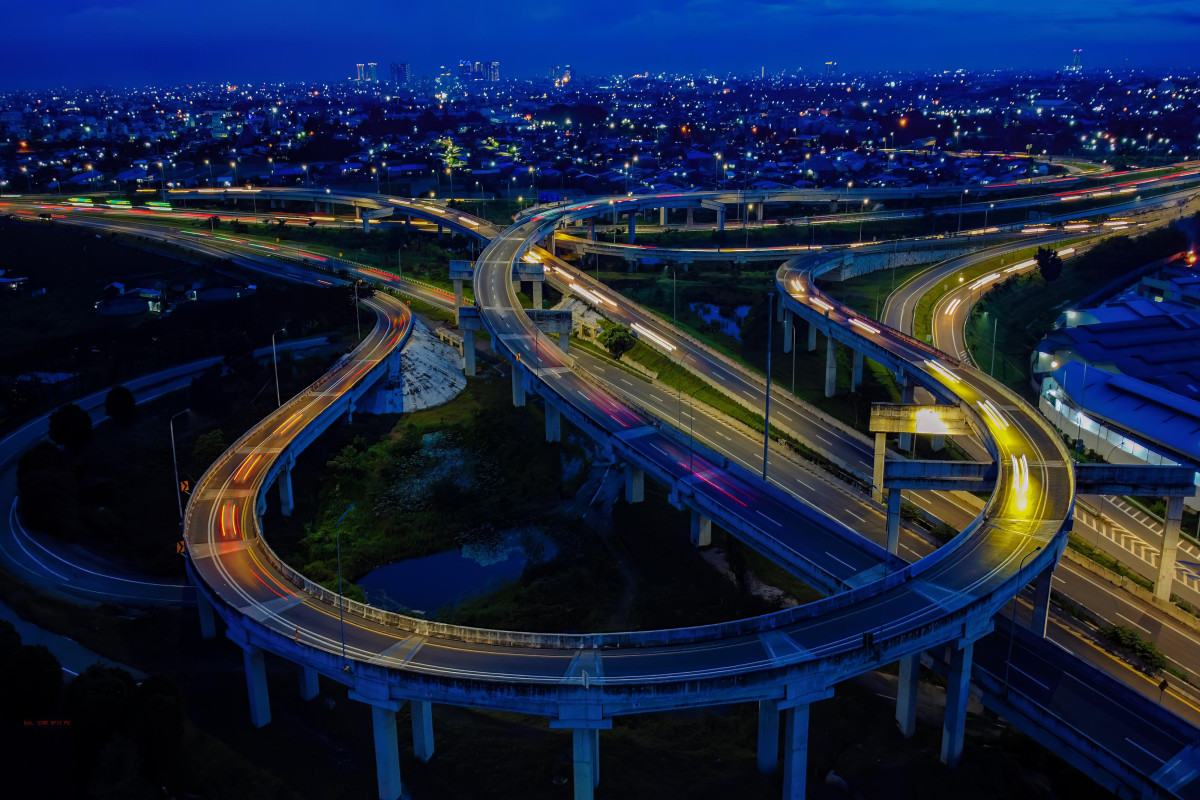
As a member of the D-8, Indonesia requires adequate infrastructure to establish relations with other member states. Proper infrastructure will enable Indonesia to strengthen connectivity among member countries which ultimately facilitates the movement of people and goods, impacting the rotation of the economic wheels.
The existence of such infrastructure cannot be underestimated. Moreover, connectivity is one of the parts of Indonesia's priority agenda during its chairmanship of the D-8. As is known, Indonesia officially became the chair of the D-8 since the beginning of January 2026.
There are five priority agenda points proposed by Indonesia. The first agenda is the improvement of connectivity and the digital economy. Then the second to fifth agendas are the improvement of trade cooperation, the development of the halal economy, the development of the blue and green economy, the development of SMEs and people-to-people relations, as well as the internal reform of the D-8 organization.
Before encouraging increased connectivity among D-8 member states, Indonesia as the chair needs to first strengthen domestic connectivity, especially through the construction of various land, sea, and air transportation infrastructure. This is important particularly considering Indonesia is a country with thousands of islands stretching across a wide area. By developing transportation infrastructure, Indonesia automatically increases connectivity within its country. With good infrastructure, connectivity can be improved, not only between regions in Indonesia but also between Indonesia and other countries.
In recent times alone, Indonesia has a number of large projects to provide high-quality transportation infrastructure. In the land transport sector, for example, Indonesia has a mission to build thousands of kilometers of toll roads with 9 sections among them having a total length of 308.70 kilometers targeted to operate in 2026. With adequate road infrastructure, access to airports and ports as the main gates to the international world becomes more accessible. In the air transport sector itself, in August 2025, the Indonesian Government through the Directorate General of Civil Aviation of the Ministry of Transportation (Hubud Kemenhub) designated international status for 36 public airports, three special airports, and Bersujud Airport.
According to the Director General of Civil Aviation of the Ministry of Transportation, Lukman F. Laisa, this step is a strategy to strengthen Indonesia's position in the global aviation network, while continuing to prioritize the fulfillment of safety, security, and comfort standards for air transport service users. Thus, trade flows will become smoother.
“International status at an airport carries a great responsibility. Every airport must ensure that immigration, customs, and quarantine facilities are ready before serving direct flights from and to abroad,” said Lukman.
Meanwhile, for sea transport infrastructure which is also useful for connecting this country with the outside world, the government has implemented various steps to boost the quality of its infrastructure. Most recently, Batam City, Riau Islands (Kepri), has a new international port, Gold Coast International Ferry Terminal Bengkong, which was inaugurated in April 2025.
Next, it is the turn of Bangka Belitung to have a sophisticated port for export purposes. The export port there is planned to be built on a 400-hectare plot of land in the Belinyu area. To that end, the government is collaborating with a company from China, namely PT CCCC First Harbor Engineering Company Ltd, to realize the construction of the port.
"This is a giant project, a mega project," said the Governor of Babel, Hidayat Arsani.
It is not impossible that all transportation infrastructure developments in Indonesia could serve as an example for D-8 member states on how to develop connectivity.
Tag: