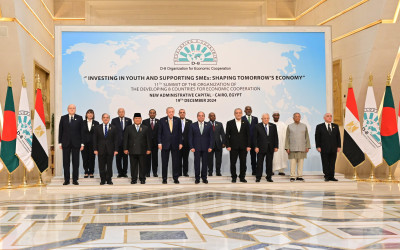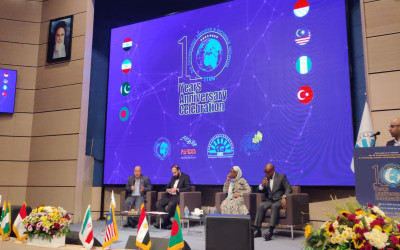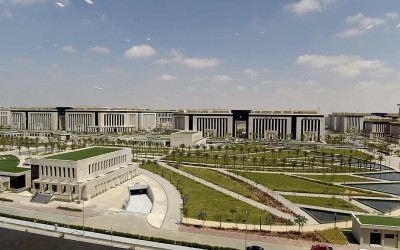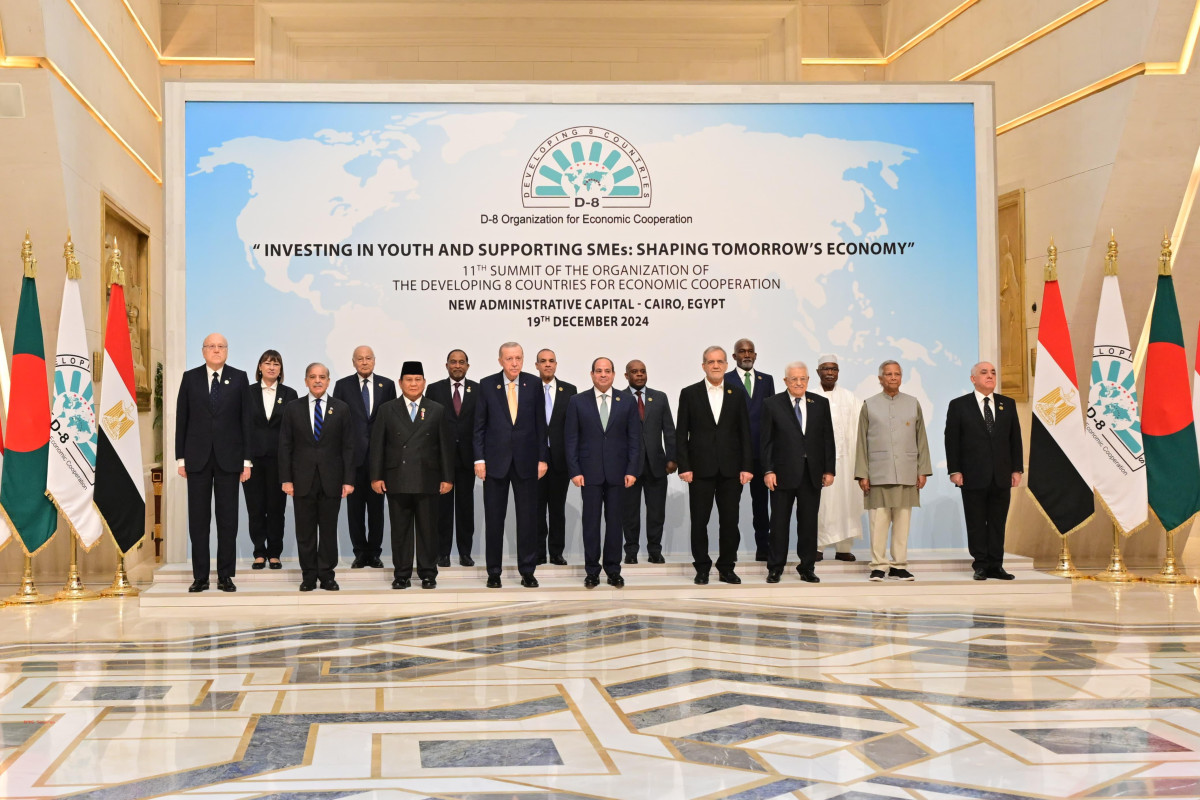
The D-8 Summit, held at the Presidential Palace in the New Administrative Capital, Cairo, from December 17-19, 2024, served as a pivotal moment for the bloc to assert its focus on sustainable economic development.
The Developing Eight (D-8) organization continues to drive economic acceleration among its nine member states, a commitment reaffirmed during its most recent summit in late 2024. The D-8 Summit, held at the Presidential Palace in the New Administrative Capital, Cairo, from December 17-19, 2024, served as a pivotal moment for the bloc to assert its focus on sustainable economic development. Amid evolving global dynamics, the 2024 agenda centered on market integration and the facilitation of international trade for all members.
Indonesian President Prabowo Subianto attended the plenary session, where he underlined the transformative power of the D-8 member states in the global economic landscape. Prabowo emphasized the need for a collective awareness of the organization's potential to improve the welfare of its respective populations.
“We must realize that the D-8 indeed holds immense potential. Overall, the D-8 represents the third-largest economic growth globally with a combined GDP of $4.81 trillion in 2023,” Prabowo stated during his address.
According to the President, such GDP figures provide the D-8 with significant bargaining power in the international economic arena. He called on fellow leaders to utilize this strength equitably for collective interests, proposing the blue economy as a new pillar of strategic cooperation and urging the development of a D-8 halal economic network to capture the growing global halal market. Addressing the broader diplomatic context, Prabowo also voiced the need for a more transparent global order that supports developing nations.
“We must also continue to advocate for a fairer global order based on international law, inclusivity, justice, and shared prosperity,” he told delegates.
The summit concluded with the Cairo Declaration, which detailed several fundamental economic initiatives. Key among these was the full operationalization of the D-8 Preferential Trade Agreement (PTA), the Multilateral Agreement on Administrative Assistance in Customs Matters, and an agreement to simplify visa procedures for business people. In a significant milestone, Egypt ratified the D-8 PTA during the event, marking the official participation of all member states in the agreement. D-8 leaders reaffirmed an ambitious target of reaching $500 billion in intra-D-8 trade by 2030, in line with the organization’s ten-year roadmap.
The results of the summit also included the adoption of the Dispute Settlement Mechanism (DSM) Protocol and the D-8 Trade Facilitation Strategy to streamline customs procedures. Furthermore, there are plans to transform the D-8 PTA into a Comprehensive Economic Partnership Agreement (CEPA) to broaden trade opportunities and attract increased foreign investment. The private sector was also integrated into the Cairo agreements. Leaders encouraged initiatives such as the use of the D-8 Payment Card for financial transactions, the establishment of the D-8 Creative Economy and Financial Center, and a New Generation Barter Trade system through collaboration with the D-8 Chamber of Commerce and Industry (D-8 CCI).
The Cairo Declaration serves as the framework for the D-8’s economic trajectory as it faces upcoming challenges. The synergy between government policy and private sector initiatives is being directed toward achieving established economic targets through the principles of inclusivity and shared prosperity.
Other Article