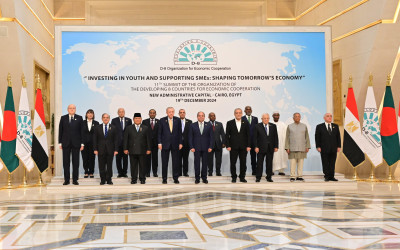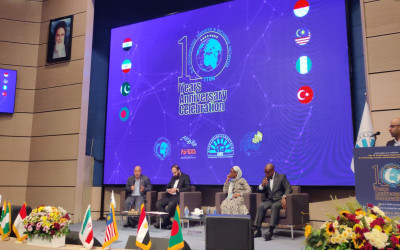
The D-8 serves as a forum for developing countries, particularly those from the Global South, to convene and cooperate. While its members are classified as developing nations, the organization wields significant influence in today’s global landscape. Chaired by Indonesia beginning in 2026, the D-8 consolidates the economic strength of Muslim-populated countries within the Organization of Islamic Cooperation (OIC). The organization addresses a range of pressing issues, from the conflict in Gaza to the empowerment of micro, small, and medium enterprises (MSMEs), all united by a shared spirit as members of the Global South.
Experts have consistently highlighted the vital role of the Global South in contemporary global affairs. For instance, the think tank Beyond the Horizon International Strategic Studies Group has published research on the emergence of the Global South within the dynamics of the world order. According to the study, the Global South has transitioned from a quiet participant to a decisive global force. "The Global South is no longer a passive actor but has already played an important role in the world," the report states. Evidence includes developing countries across Asia, Africa, Latin America, the Middle East, and the Pacific actively engaging cooperation on global politics, economics, and security. Diplomatic engagements frequently involve leaders from developed nations, including Donald Trump, Xi Jinping, and Emmanuel Macron.
The growing importance of the Global South is also evident in international institutions such as the UN Security Council, the IMF, the World Bank, and the G20. Accordingly, the Global North, traditionally associated with developed countries, is no longer expected to dominate, but is called upon to establish partnerships that are respectful, inclusive, and mutually beneficial, rather than purely transactional or driven by hidden agendas. The aspiration for a larger global role is driven by several factors, including the effort by many countries, including Indonesia, to maintain balanced relations among major powers such as the United States, China, Europe, and Russia. Indonesia pursues this balance by adhering to its "independent and active" foreign policy principle.
In the economic sector, the Global South continues to drive growth through various initiatives. Recent years have seen significant investment flows from the Middle East to ASEAN, the development of the African Continental Free Trade Area, and the Belt and Road Initiative (BRI), which aims to connect Asia, Europe, and Africa through land and sea routes. These developments necessitate international cooperation between developing nations and the Global North. The Global South continues to assert its position as a global economic and political power that seeks to be embraced by developed nations as an equal partner in the international system.
In the current global context, the Global South can contribute to building a stronger and more inclusive international system. This requires developed countries to engage the Global South as equal partners, rather than subordinate allies or rivals. By taking this approach, both stability and shared benefits can be achieved.