The current global landscape is increasingly characterized by geopolitical fragmentation, economic uncertainty, and the relative decline of several major powers. A report titled The Great Fragmentation: The Rise of Middle Powers in a Fractured International Order highlights that the level of geopolitical fragmentation today has surpassed that of the Cold War era.
Since 2015, the influence of several major economies including the United States, China, Japan, and parts of Europe, has tended to stagnate or weaken in relative terms. At the same time, the number of countries classified as middle powers has nearly doubled, rising from nine in 1991 to sixteen today.
In this evolving context, the role of middle powers has become increasingly significant. Countries with substantial economic capacity and diplomatic reach, yet not classified as great powers, now have greater space to shape global agendas through collaborative approaches and diversified partnerships. The report also notes that, aside from India, which is projected to emerge as a future great power, most established major powers have experienced a decline in their share of global economic output.
Meanwhile, middle powers are expanding their diplomatic connectivity and increasing their contributions to global GDP. This trend makes it increasingly difficult for any single major power to unilaterally influence the behavior of other states.
Indonesia as a Global Middle Power
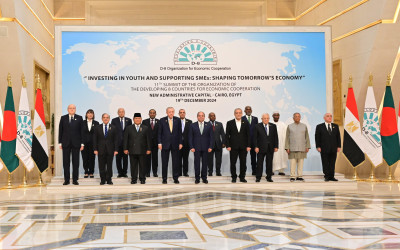
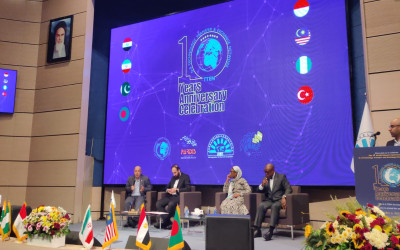
Within this shifting international environment, Indonesia occupies a strategic position as a middle power that actively promotes cooperation among developing nations. One important platform for this engagement is the Developing Eight Organization for Economic Cooperation (D-8), which brings together major Muslim-majority developing economies to strengthen economic collaboration and collective resilience.
Through the D-8, Indonesia contributes to expanding South–South cooperation, particularly in trade, investment, industrial development, and food security. The forum unites eight countries such as Azerbaijan, Indonesia, Türkiye, Iran, Pakistan, Bangladesh, Malaysia, Egypt, and Nigeria, which collectively represent a significant portion of the Global South’s population and economic potential.
As a middle power, Indonesia does not merely participate in international cooperation; it also contributes to shaping the agenda. Through the D-8 framework, Indonesia promotes stronger economic connectivity among developing countries while encouraging collaboration in emerging sectors such as the digital economy, sustainable development, and innovation-driven growth.
In a fragmented global environment, this role reflects a key function of middle powers: acting as connectors and facilitators of dialogue among diverse partners. Platforms such as the D-8 allow Indonesia to help amplify the collective voice of developing nations while fostering practical economic cooperation.
Strategy and Risk Management
The report on global fragmentation also highlights that internationally linked internal conflicts have nearly tripled since 2010. In many cases, middle powers are increasingly involved as mediators, partners, or supporters in efforts to manage and resolve conflicts. While such involvement carries risks, it also presents opportunities for middle powers to play constructive roles in promoting stability.
In an era of global economic uncertainty and potential recession, diversification has become a key strategy. Middle powers increasingly seek to expand trade agreements and cross-regional cooperation in order to reduce dependence on a single major partner. This approach strengthens economic resilience and broadens diplomatic options.
For Indonesia, such a strategy aligns with efforts to deepen economic transformation, strengthen digital development, and expand partnerships with fellow developing countries. Through platforms like the D-8, Indonesia seeks to reinforce economic collaboration that benefits not only its members but also the broader Global South.
Contributing to Global Stability
The role of middle powers in a fragmented world is not to replace major powers, but to complement and balance the international system. With an extensive diplomatic network and active participation in multilateral cooperation, Indonesia contributes to maintaining economic stability while advocating for more inclusive global governance.
In an increasingly fragmented international environment, middle powers like Indonesia serve as catalysts for cooperation, bridges between diverse interests, and supporters of reforms that make global systems more representative. Through active engagement in platforms such as the D-8, Indonesia demonstrates how collaborative diplomacy among developing countries can help strengthen resilience and promote shared prosperity.
This position requires consistent policies, strong institutional capacity, and a careful understanding of global dynamics. With these elements in place, middle powers can play a crucial role in sustaining stability and encouraging international collaboration in an era defined by uncertainty.
Tag: